


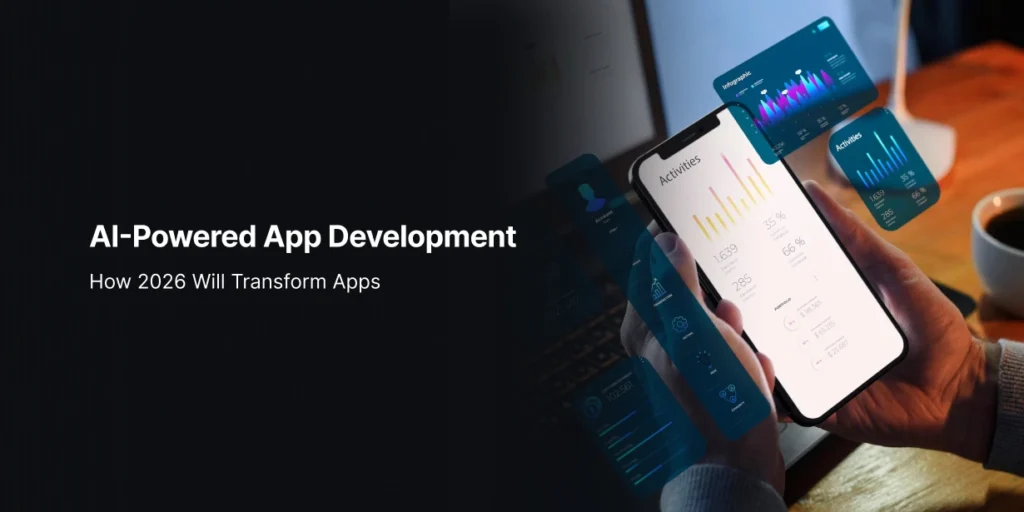
Application development is evolving faster than ever. More importantly, the changes ahead run deeper than many businesses expect. Over the next few years, artificial intelligence won’t remain just a supportive tool for developers. Instead, AI will become a core part of how applications are planned, built, tested, and continuously improved.
Today’s apps are still created through long development cycles, manual coding, repeated testing, and multiple revisions. However, by 2026, application development will focus on speed, intelligence, and automation from the very start.
Let’s explore how AI will reshape app development—explained in simple, practical terms.
1. AI Will Act Like a True Development Partner
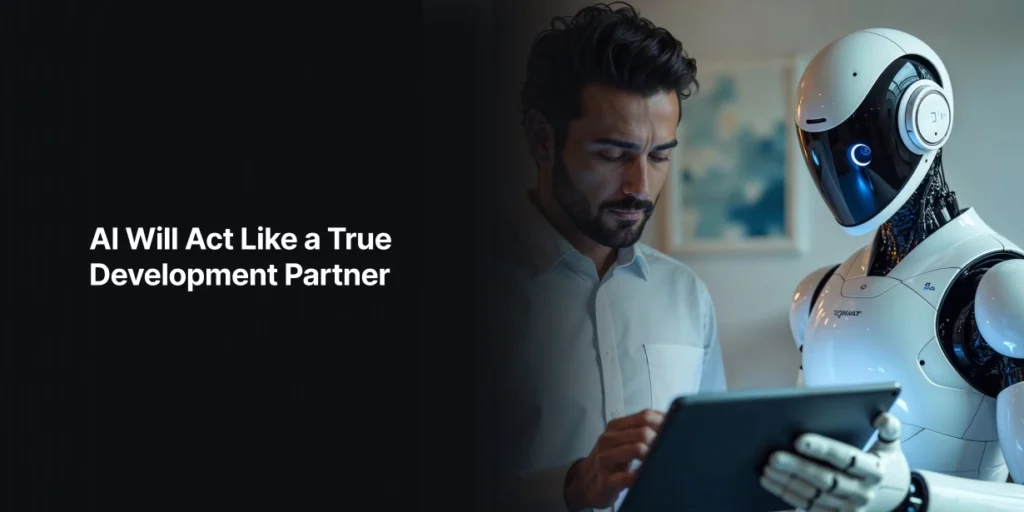
Until now, AI has mainly assisted developers with code suggestions or error detection. However, its role is rapidly expanding. In the near future, it will function as a reliable co-developer.
AI will help teams:
Write cleaner, more efficient code
Detect bugs instantly
Suggest architectural improvements
Build entire features automatically
Test functionality in real time
AI won’t replace developers. Instead, it will amplify their skills—making teams faster, sharper, and more productive. As a result, this shift will be especially valuable in mobile and web application development, where speed and stability are critical.
Think of AI as a teammate that never gets tired and always double-checks your work.
2. Development Timelines Will Shrink Dramatically

If building an application currently takes three to six months, AI could cut that timeline nearly in half.
Why does this happen? Because AI will handle repetitive, time-consuming tasks that traditionally slow development teams down.
It will assist with:
UI and layout generation
Workflow planning
Backend logic development
API Integrations
Performance optimization
Immediate Bug Detection
As a result, businesses can launch products faster—often before competitors even finish planning. for companies focused on digital transformation and DevOps-driven workflows, this speed becomes a major advantage.
3. Apps to Become Personalized to Individual Users
By 2026, users won’t experience the same app in the same way. Instead, applications will adapt dynamically to individual behavior and preferences.
AI will personalize applications based on behavior, preferences, location, usage patterns, and even time of day.
For instance:
A fitness app that adjusts workouts based on energy levels.
An eCommerce app can change product recommendations by budget and taste
A learning platform can be adjusted in difficulty based on progress.
As a result, applications will feel more like intelligent assistants than static tools—becoming a key part of AI-powered digital transformation.
4. No-Code Platforms Will Become Truly Intelligent

No-code tools already allow non-developers to create simple applications. With AI, these platforms will become far more powerful.
Users will describe what they want, in plain English, and AI will
Design screens and layouts
Build logics and workflows
Suggest improvements
Fix errors
Assist with deployment
This opens new opportunities for founders, marketers, and businesses to build applications without writing traditional code.
5. Testing Will Become Faster and More Reliable
Testing has traditionally been one of the slowest stages of development. AI will transform this process.
Automated AI testing will confirm:
Multiple devices and screen sizes
Different network conditions
Complex user journeys
Security vulnerabilities
As a result, applications will launch with fewer issues and remain stable as usage grows over time.
6. Security Becomes Smarter and Continuous

Security will no longer be a one-time checkpoint.
AI systems will constantly monitor applications to:
Detect Threats in Real Time
Block suspect activity
Alert developers instantly
Suggest improvements in security
Prevent data leaks and fraud
When combined with modern cloud computing environments, this approach creates stronger, always-on protection and improved system reliability.
7. Applications Will Be More Intuitive to Use

Meanwhile, interfaces will evolve beyond simple tapping and clicking to offer more natural interactions.
By 2026, apps will enable:
Voice Commands
Intelligent chat conversations
Image and visual recognition
Real-time language translation
Gesturing-based actions
This evolution will redefine how businesses think about UI/UX design, making interactions more intuitive and human-centered.
8. Applications Will Automatically Scale
Handling growth used to be complex and costly. AI-managed cloud infrastructure will automate this entirely.
AI-powered systems will:
Scale up resources during high traffic
Reduce costs during low usage
Balance traffic intelligently
Keep performances uniform
As a result, your application remains fast and reliable—even during sudden spikes in users. Because of this, cloud-native architectures are becoming essential. This is why cloud-native architectures are becoming essential.
9. AI will be baked into applications from day one
Instead of adding AI features later, development teams will design applications around AI from the start.
This includes planning for:
Intelligent automation
Predictive decision-making
custom user flows
Data Pipelines and Analytics
Optimizing performance
Consequently, this approach results in future-ready software—especially when working with a custom software development company.
10. Developers Will Have To Be Robust In AI Skills
Ultimately, AI won’t replace developers, but it will redefine their role within modern development teams.
Developers’ needed skills will increasingly involve:
Working with AI development tools
Integrating machine-learning models
Data administration and analysis
Building Predictive Workflows
Creating AI-enabled applications
This blend of traditional development and AI expertise will define the next generation of technology professionals.
Final Thoughts: Why It Matters
AI-powered app development will reshape the digital world by 2026. Applications will be:
Faster to build
Smarter in functionalities
Stronger security
Highly personalized
More scalable More cost-effective Businesses that start adopting AI-driven development now will gain a lasting advantage. Those who wait may struggle to keep pace. If you’re planning to build or modernize an application, now is the perfect time to think AI-first—because the future of app development is already unfolding.