

In the current rapid digital landscape, building software is no longer restricted to physical hardware or on-premises setups. Organizations now require speed, ability to scale, adaptability, and strong protection—all achievable through cloud services. This makes Cloud Computing technology the foundation of modern software creation, enabling firms to efficiently develop, launch, and grow applications.
From new ventures creating initial product versions to large corporations managing intricate systems, Cloud service structures have revolutionized how software is conceived and delivered.
🔹 Understanding Cloud Computing and Its Operation
Cloud services encompass providing computational assets like servers, data storage, databases, connectivity, and software tools via the web. Rather than purchasing and looking after their own physical equipment, enterprises can utilize these capabilities as needed from external cloud vendors, being charged solely for consumption. This method not only cuts down on hardware expenditures but also boosts adaptability, scale, and streamlined operations.
A frequent query concerns the makeup of cloud groundwork. Essentially, cloud infrastructure is comprised of virtualized servers, storage arrays, network elements, and defense mechanisms that work together to back application building, launching, and oversight. Differing from conventional local setups, cloud infrastructure provides flexible scaling, allowing resources to grow or shrink automatically according to requirements.
Furthermore, it ensures robust uptime and dependability, as tasks can be spread across various centers to avoid service interruptions. Grasping these constituent parts reveals why cloud environments are vital for contemporary software creation, allowing organizations to construct, roll out, and oversee applications with greater effectiveness than in the past.
🔹 Grasping Cloud Computing Service Structures
Current software development heavily relies on cloud service structures, which dictate how cloud resources are supplied. The three primary structures are:
- Infrastructure as a Service (IaaS) : IaaS supplies virtual machines, data storage, and connectivity via the cloud. You oversee the OS and your software, as the vendor handles the physical hardware.
Example: Amazon EC2, Microsoft Azure VMs
- Platform as a Service (PaaS) : PaaS gives developers an instant environment to construct, check, and launch apps, bypassing server or infrastructure care.
Example: Google App Engine, Heroku
- Software as a Service (SaaS) : SaaS furnishes finished applications accessible online. You merely utilize the program, unconcerned with setup or upkeep.
Example: Gmail, Zoom, Salesforce
Many people wonder about the definition of software as a service in cloud computing. SaaS grants users access to application software via a web browser without needing installation, making it perfect for functions like client management, enterprise resource planning, and various business tools. These cloud service structures cut down on operational expenditures and accelerate development timelines.
🔹 Cloud Deployment Architectures Explained
Another key element in cloud technology is cloud deployment architectures. These specify how cloud assets are positioned and accessed.
Typical cloud deployment architectures include:
- Public cloud
A public cloud is a shared cloud computing setting accessible to numerous users via the internet. It is economical, adaptable, and managed by an external vendor, making it suitable for companies requiring rapid setup without the burden of hardware upkeep.
Example: AWS, Microsoft Azure, Google Cloud
- Private Cloud
A private cloud is reserved for the exclusive use of one entity, offering greater protection, governance, and personalization. It can reside within the organization’s own facilities or be hosted externally. Best suited for enterprises handling confidential information or subject to specific regulations.
Example: VMware Cloud, Company-owned data centers
- Hybrid Cloud
A hybrid cloud merges public and private cloud infrastructures, enabling organizations to shift workloads between them as required. This model provides agility, expandability, and improved oversight for critical data.
Example: Local servers linked with AWS or Azure
Organizations frequently inquire about the meaning of cloud deployment or cloud deployment architecture to select the most suitable strategy for their requirements. Choosing the correct cloud deployment architecture ensures data protection, adherence to regulations, and optimal performance.
🔹 The Part of Cloud Infrastructure in Software Building
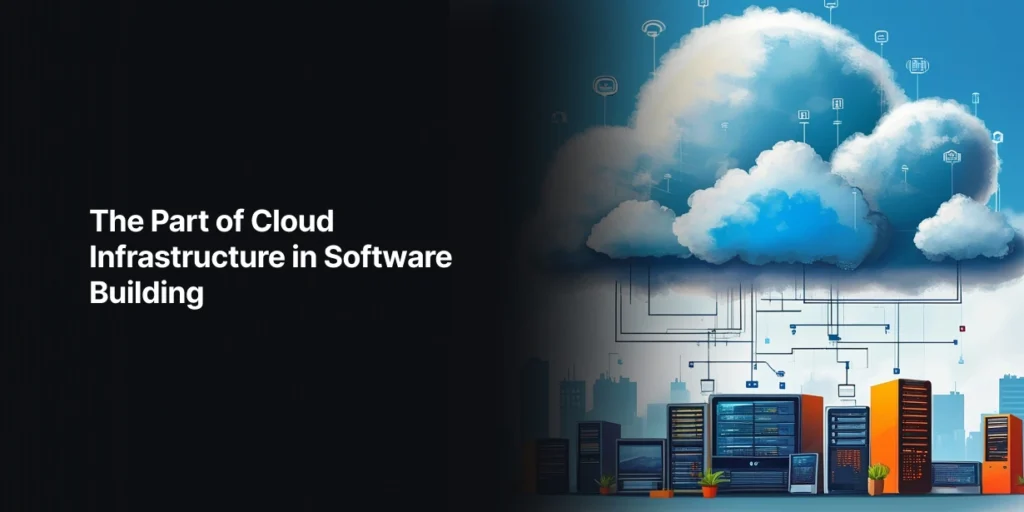
A robust cloud infrastructure is vital for contemporary applications. It facilitates agile methods, continuous integration, automated validation, and swift rollouts.
Knowing what cloud infrastructure entails also allows companies to expand their applications during high-demand periods without interruption. With advanced cloud computing services, developers can concentrate on innovation rather than managing servers.
🔹 Advantages of Cloud Services for Businesses

The widespread adoption of cloud services in software creation stems from several upsides:
- Scalability as needed
- Budget-friendly usage-based billing
- Quicker development and deployment
- High uptime and recovery capabilities
- Enhanced teamwork for distributed teams
By employing flexible cloud service structures, businesses can rapidly adjust to market shifts and user expectations.
🔹 SaaS, Security, and Current Cloud Applications

Security remains a primary concern for organizations transitioning to the cloud. This is where security services within cloud computing become crucial. It encompasses data encoding, identity administration, and risk identification to safeguard applications.
Likewise, the concept of software as a service in cloud computing continues to be a significant driver for client relationship systems, analytical platforms, and productivity aids. Many firms favor SaaS because it lessens upkeep burdens and improves ease of access.
🔹 Cloud Computing for New Ventures, Large Firms & Global Groups

Cloud technology benefits organizations of all scales. Startups leverage cloud services to rapidly build initial products, while large corporations depend on sophisticated cloud service structures for extensive operations.
Companies also find it advantageous to engage SaaS developer talent or secure software developers from regions like India due to cost-effectiveness and technical proficiency. Many international organizations bring on Indian development resources to construct secure, scalable cloud-based solutions.
India has also become a center for CRM offerings, positioning it as a premier choice for businesses seeking a CRM software development partner in the region.
🔹 Why Businesses Select Tecoreng as a Cloud Services Partner

Tecoreng is a recognized provider in the USA & UK that supplies high-caliber cloud computing services customized to organizational demands. With expertise in contemporary cloud service structures, Tecoreng assists firms in designing, launching, and managing cloud-based software solutions.
Organizations collaborate with Tecoreng to recruit software developers from India, engage Indian development teams, and secure SaaS development specialists familiar with international benchmarks and cloud best practices.
🔹 The Outlook for Cloud Computing in Software Building

The path of software creation is closely linked with progress in the cloud. New directions like automation powered by AI, running applications without managing servers, using containers, and sophisticated cloud release methods are reshaping how software is engineered, validated, and deployed.
These novel approaches facilitate quicker building phases, enhanced adaptability, and better utilization of assets, letting companies concentrate on creative pursuits instead of maintaining underlying systems.
As entities increasingly embrace contemporary cloud services like infrastructure, platform, and software as a service, cloud technology continues to be central to digital evolution. It underpins the building of adaptable, protected, and expandable applications while fostering smooth teamwork among worldwide groups.
Moreover, weaving in AI, machine learning, and data analysis within cloud environments leads to sharper choices and more streamlined software activities, confirming cloud computing’s role as the core of the coming digital landscape.
🔹 Conclusion
Cloud technology has transformed how software is built, launched, and scaled. Utilizing powerful cloud service structures, secure cloud infrastructure, and adaptable cloud deployment arrangements enables businesses to innovate faster and operate more effectively.
Teaming up with a knowledgeable partner like Tecoreng, a leading USA & UK services provider, guarantees access to dependable cloud computing services and skilled developers capable of transforming concepts into successful digital products.